
Chain Link Fence Frequently Asked Questions
Chain link fencing is one of the most commonly used types of fencing in the United States. Read on to learn more.
What is Chain Link Fencing Called?
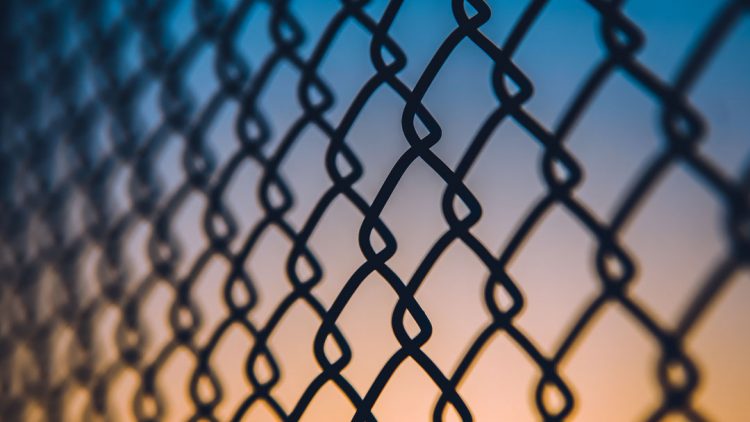
Chain Link Fabric, which is also called wire or mesh, is made by weaving a sequence of spirals together to generate a diamond pattern. It comes in different sizes and gauges. With #9 gauge wire, the most frequent pattern is a 2″ Pattern. For pool fences, the diamond size must be less than 2″. The 2″ Pattern is the size of the mesh, which is the space between two parallel wires in the cloth.
What Does The Wire Gauge Mean?
The fabric is made up of individual steel wires that are woven together. The gauge is the diameter of the wires. The wire’s diameter gets smaller (thinner) as the gauge number goes up. The most frequent gauges are 6 gauge (.192″), 9 gauge (.148″), 11 gauge (.120″), and 11-1/2 gauge (.113″). For both home and business use, 9 gauge is the most common size of wire. 11 and 11-1/2 gauge are usually used for temporary fence, while 6 gauge is employed for high-security purposes.
What Does “Selvage” Mean?
The selvage is the part of the chain link fabric that is finished at the top and bottom, where the woven strands of wire are bent together. “Knuckle” and “Barbed” (or twisted) are the most prevalent varieties of selvage. Knuckle is safer because it is rounder and doesn’t have any sharp points that could get caught on clothes or persons. Barbed or twisted feature sharp ends and are often utilized in places where security is very important.
What About Coatings?
There are three main kinds of coatings: Spectra, Permafused ll, and Galvanized. Galvanizing is a zinc coating that goes over bare steel. It is one of the best and cheapest ways to stop rust and corrosion. We hot dip all of our galvanized parts, which makes them stick better than plating. People often call Spectra and Permafused II “Vinyl Coated.” Colored poly-coatings are put on galvanized items to protect them more and make them seem better. Spectra is the most prevalent type of vinyl coating and the least priced. It is a coating made of polyester powder. Permafused ll is a thicker and more expensive polyolefin covering that is typically utilized in business settings. Green, black, and brown are all colors that both vinyl coatings come in.
What Is The Framework?
The frame work is the steel (or pipe) frame that the chain link fabric is fastened to. The framework usually has three main parts: the top rail, the line posts, and the terminal posts. The chain link fence frame is also covered in galvanized steel to keep it from rusting. We have two common pipe weights: SCH. 20 and SCH. 40. Schedule (SCH) is the term for the thickness of the tubular steel walls. People utilize SCH. 20 most often in their homes. We measure the outside diameter of the pipe to find out how big it is. The framework, like the chain link wire, can be covered with vinyl.
How Do Fittings Work?
A chain link fence system needs a few different kinds of fittings to put together. There are special fittings that go with line posts, terminal posts, and gates. Most home uses use die-cast steel or aluminum fittings that are lighter and cheaper. Commercial and industrial fittings are usually made of cast iron or malleable steel. All of our steel fittings have a galvanized coating. The fittings hold the parts of the fence together, and in cases where there are gates, they let the gate leaves move and be locked. For further details, please view our Chain Link Fence component guide below. You can also get vinyl-coated fittings to go with your whole vinyl-coated fence system.
Do The Footings Have To Be Concrete?
No, it is not necessary for the posts to be set on concrete footings. Usually, we suggest driving (or pounding) the posts into the ground at least 4 feet deep. We use a pneumatic post driver that practically hammers the post into the ground. For do-it-yourself installations, you can borrow a handheld post driver from us. Driving posts into the ground causes the least amount of disturbance to the naturally compacted soil, which helps keep it from moving and heaving. Installation is also quicker and easier, and it has the least effect on the surrounding area. We do suggest that the gate and terminal posts be put in concrete footings from time to time, depending on the use and the type of soil.